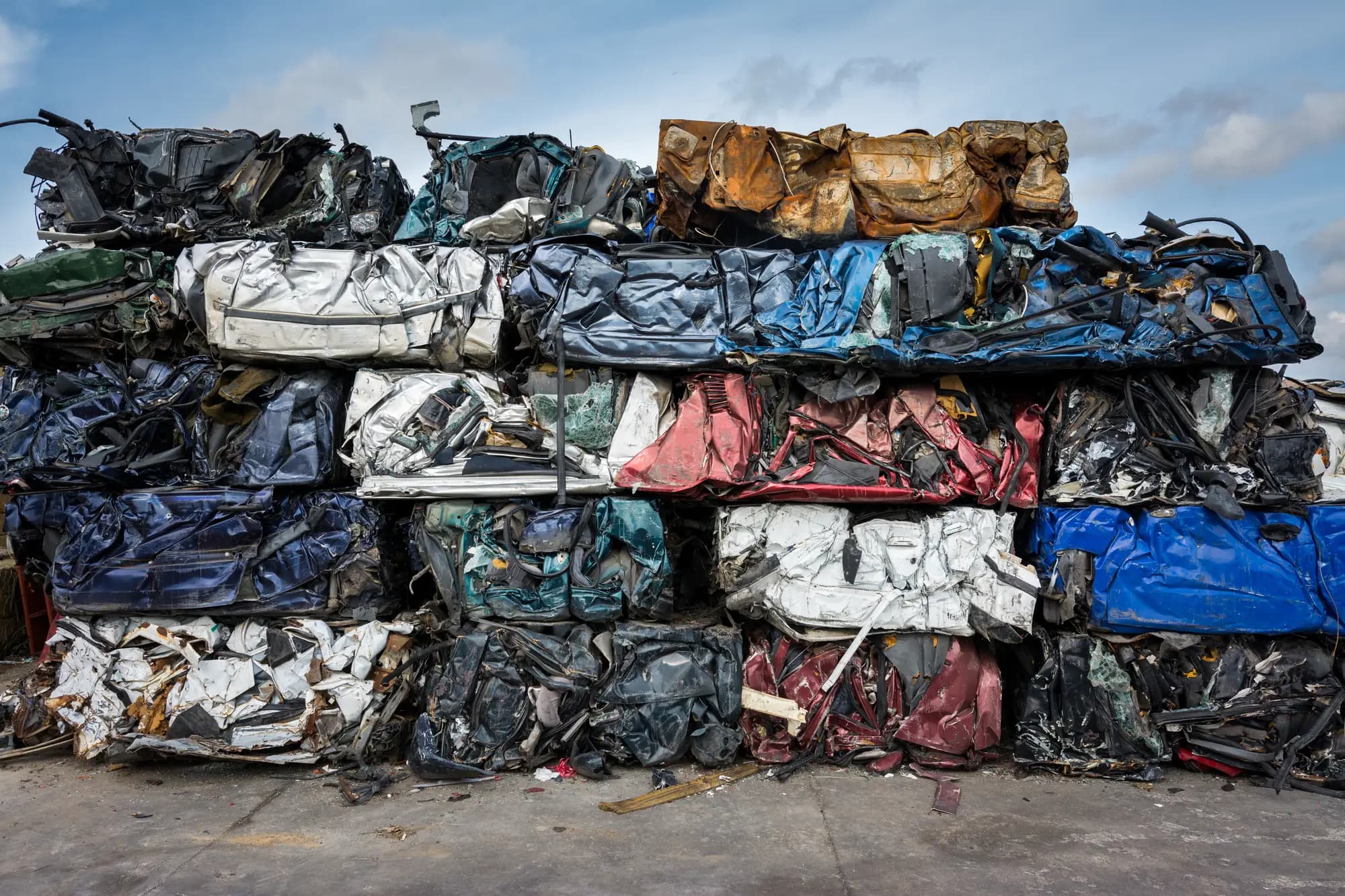
Car Recycling For the Enviroment
When you scrap a car in the UK, where does it actually go? Legitimate recycling isn't just about crushing metal. It's a tightly regulated process that recovers valuable materials, safely disposes of hazardous fluids, and keeps toxic components out of landfill. At Scrap A Car For Cash, every vehicle we collect is processed through an Authorised Treatment Facility that meets strict environmental standards. You get paid fairly, your car disappears legally, and around 95% of its weight gets reused or recycled responsibly.
Every year, roughly two million vehicles reach the end of their working life in the UK. Without proper recycling, those cars would create serious environmental problems. Engine oil, brake fluid, coolant, battery acid, and refrigerants can contaminate soil and water if they leak into the ground. Heavy metals like lead and mercury pose long-term risks to wildlife and human health. That's why UK law requires all end-of-life vehicles to be processed through licensed Authorised Treatment Facilities.
What Happens at an Authorised Treatment Facility
When your car arrives at an ATF, trained technicians follow a strict depollution process. First, they drain all fluids: engine oil, gearbox oil, brake fluid, coolant, fuel, and screen wash. These liquids are stored separately and sent for specialist treatment or recycling. Next, they remove the battery, which contains lead and sulphuric acid. Car batteries are among the most recycled products in the world, with over 99% of their components reused in new batteries.
Air conditioning systems contain refrigerants that contribute to ozone depletion if released into the atmosphere. Technicians use specialist equipment to safely extract and recycle these gases. Airbags are carefully deployed or removed to prevent accidental detonation during crushing. Catalytic converters, which contain precious metals like platinum, palladium, and rhodium, are removed and sent for refining. Even your tyres get a second life, often shredded for use in playground surfaces, road surfaces, or fuel in cement kilns.
Material Recovery and Reuse
Once depollution is complete, the car gets dismantled further. Usable parts in good condition, such as engines, gearboxes, body panels, lights, and interior trim, are removed and sold as replacement parts. This extends the life of other vehicles and reduces demand for newly manufactured components. Glass from windows and windscreens is separated and recycled into new glass products or used in construction materials.
Plastics from bumpers, dashboards, and trim pieces are sorted by type and sent to specialist recyclers. Modern cars contain a surprising variety of plastics, and separating them properly ensures they can be turned into new products rather than incinerated. Copper wiring is recovered from the electrical system, while rubber components are shredded for reuse.
The Final Stage: Metal Recycling
After everything valuable or hazardous has been removed, what's left is mostly steel and aluminium. The remaining shell is crushed and shredded into fist-sized pieces. Powerful magnets separate ferrous metals (steel and iron) from non-ferrous metals (aluminium, copper, brass). These metals are cleaned, melted down, and sold to manufacturers who turn them into new cars, appliances, construction materials, and countless other products.
Steel from cars is particularly valuable because it's high-quality and easy to recycle infinitely without losing strength. Using recycled steel instead of virgin ore reduces energy consumption by around 60% and cuts carbon dioxide emissions significantly. Aluminium recycling saves even more energy, roughly 95% compared to producing new aluminium from bauxite ore.
Why Licensed Recycling Matters
Unlicensed scrap yards may offer cash for your car, but they often skip the depollution process to save time and money. This creates environmental damage and legal problems. When you scrap your vehicle with a legitimate service, you receive a Certificate of Destruction from the DVLA. This proves your car was recycled legally and protects you from liability if it's involved in crime or continues to rack up fines.
Choosing proper car recycling isn't just about following the rules. It's about ensuring valuable materials stay in circulation, hazardous substances are handled safely, and the environmental cost of your old vehicle is minimised. When you call 0800 002 9733, you're guaranteed that your car will be processed correctly from collection to final recycling.