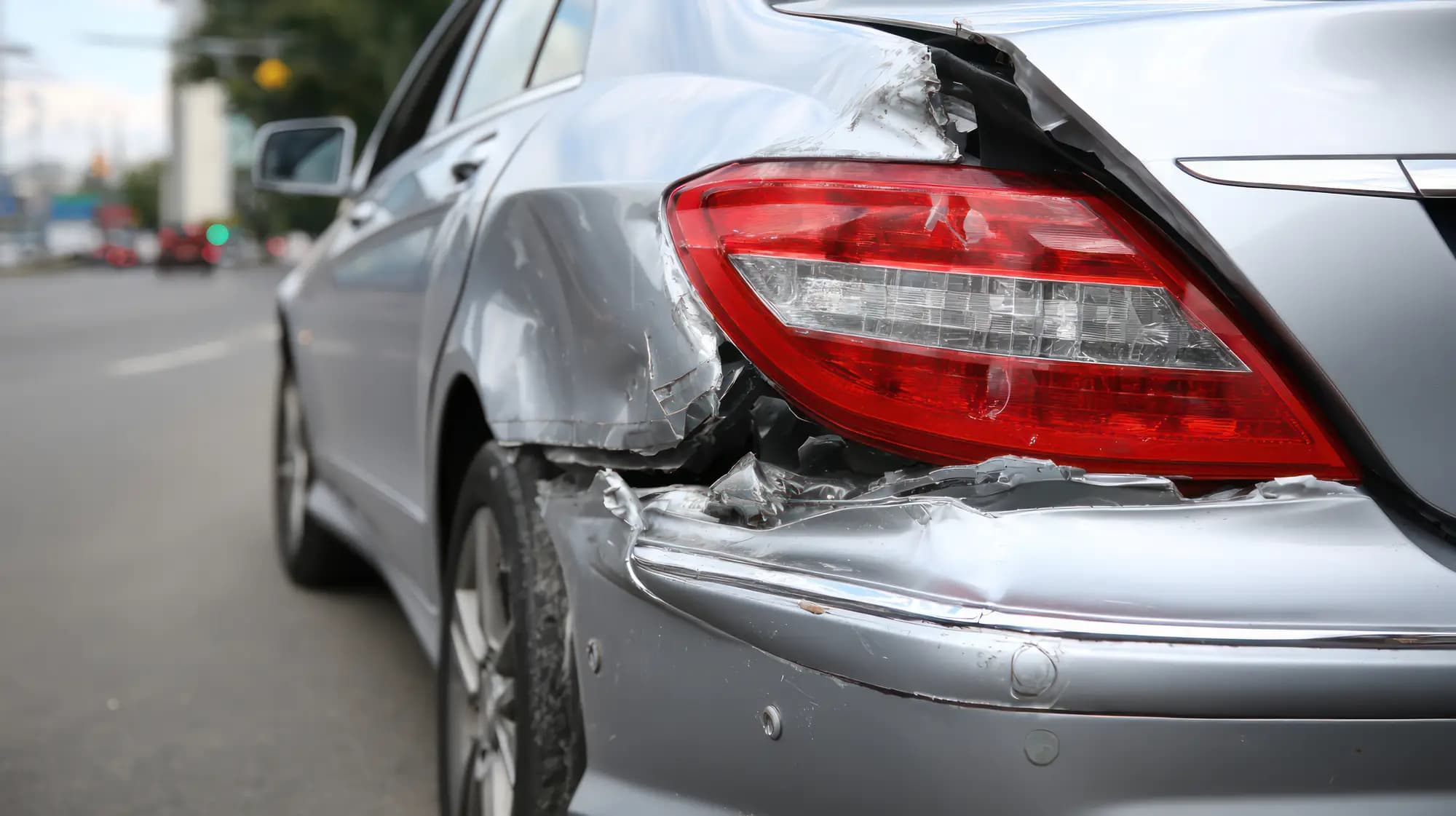
Scrap an Accident Damaged Car

After an accident, repairing a car is not always worth it, and a badly damaged car can be hard to sell privately. This page explains how damaged cars are valued and collected, and how accident damage differs from an insurance write-off.

  • Free collection
  • Non-driving cars collected
  • Paid on collection
  • Certificate of Destruction if scrapped

For a no obligation quote, complete the form or call

0800 002 9733 or 07766 797 352

GB

Types of accident damage

Accident-damaged cars are accepted for a valuation whatever the extent of the damage, including:

  • Bodywork damage: dents, crushed panels, broken lights and bumpers.
  • Mechanical damage from the impact: radiator, suspension, steering or wheel damage that stops the car being driven.
  • Structural damage: damage to the chassis, pillars or floor pan.
  • Airbag deployment and the interior damage that often comes with it.

Can a damaged car be collected if it can't be driven?

Yes. Damaged cars are loaded onto a recovery vehicle, so the car does not need to be driveable. Tell the collection company whether the wheels turn and the steering works, and where the car is. If it was taken to a garage or a storage yard after the accident, give the address and who to contact there so collection can be arranged with them.

How damage affects the valuation

A person at the collection company values the car from the details you give. With accident damage, the question is what can still be used. Undamaged panels, the engine, the gearbox and interior parts may have value even when the car as a whole is not worth repairing. Weight and materials count as well.

The more precisely you describe the damage, the more reliable the valuation. That means which corner or side was hit, whether airbags went off, and whether the car still starts. The car is inspected on collection, and the valuation can be revised if the damage is different from the description. See scrap car prices for every factor.

Accident damage or insurance write-off?

If you claimed on your insurance, the insurer decides whether the car is ‘written off’. If it is, the insurer pays you the car's current value instead of the cost of repair and gives it a category: A, B, S or N. The insurer usually deals with getting a written-off car scrapped (GOV.UK: insurance write-offs).

If you did not claim, or the insurer did not write the car off, it is still yours to sell or scrap. If you kept a Category N or S car after a write-off, see insurance write-offs.

Collection

Collection is free, and it is arranged directly with the collection company once you accept its valuation. Mention anything that affects access. If you need to cancel after accepting, give at least 24 hours' notice by phone. More on free scrap car collection.

Paperwork

Have the V5C log book and photo ID ready. When the car is scrapped, give the V5C to the treatment facility but keep the yellow section, then tell DVLA the vehicle has gone to an authorised treatment facility. You receive a Certificate of Destruction within 7 days if the car is completely scrapped. The details, including cars with outstanding finance, are on how it works.

Who does what

  • Scrap A Car For Cash (operated by Lead Stack Ltd, company number 15877625) takes your enquiry and passes it to an affiliated vehicle collection company that covers your area.
  • The collection company values the vehicle, collects it free of charge and pays you on collection, in line with the terms you agree with them.
  • If the vehicle is completely scrapped, that happens at an authorised treatment facility (ATF), which gives you a Certificate of Destruction. A vehicle that is repaired and resold instead does not get one.

More detail: how it works and our terms and conditions.

Get a valuation for your damaged car

Send the registration, postcode and a description of the damage, and the collection company covering your area will contact you with a free, no-obligation valuation.

We take enquiries from across England, Scotland and Wales — see the areas we cover.